Yard Drainage Diagnostics: How to Find the Source of Standing Water in 30 Minutes
Key Takeaways
- Standing water in your yard can threaten your foundation if not corrected.
- Most drainage issues can be diagnosed in 30 minutes with simple observation.
- Poor grading and short downspouts are common causes in Texas homes.
- Identifying the source early can prevent costly foundation repairs.
- Persistent pooling near the slab requires professional evaluation.
Why Standing Water Is a Foundation Risk in Texas
Standing water in yard areas can appear after heavy rainfall, but the water itself is only part of the problem. Persistent pooling can signal underlying yard drainage problems that eventually affect soil stability around the home.
When water collects near the structure instead of flowing away, the surrounding soil becomes saturated. Over time, repeated moisture exposure influences how the soil supports the foundation. Because of this, identifying drainage issues near foundation areas early is essential for protecting a home.
Fortunately, most homeowners can trace the source of standing water in yard spaces with a quick visual inspection. By observing runoff patterns, grading, and drainage systems, it is often possible to identify where water enters the yard, how it travels across the property, and where it collects.
In many cases, the source of water pooling near house foundations can be identified in less than 30 minutes through careful observation.
Texas properties often feature expansive clay soils that respond strongly to changes in moisture. According to the U.S. Geological Survey, expansive soils “can shrink or swell depending on moisture content, sometimes causing structural damage to buildings and infrastructure” (U.S. Geological Survey, n.d.).
Standing water may also increase hydrostatic pressure around structural surfaces. When moisture remains against concrete slabs or footings, pressure can gradually build in the surrounding soil. Over time, these conditions may contribute to settlement, cracks, or shifting soil beneath the home.
If persistent pooling persists after storms, homeowners benefit from professional drainage solutions that safely redirect away from the property.
30-Minute Yard Drainage Diagnostic Checklist
Diagnosing drainage problems begins with understanding how water travels across your property. Rainwater typically follows predictable paths determined by elevation, grading, and obstacles such as landscaping or fences.
A quick inspection after rainfall can reveal how water enters the yard, where it travels, and where it slows or stops. Homeowners can also simulate rainfall by running a hose along roof edges or across the lawn to observe runoff behavior.
The following inspection steps help identify the most common causes of standing water in yard areas.
Step 1: Check Downspout Discharge Points
The first inspection point is where roof runoff exits the gutter system. Downspouts should carry water several feet away from the home so it disperses safely across the yard.
When downspouts discharge too close to the structure, water may accumulate along the slab perimeter. Damp soil, erosion channels, or repeated puddles beneath the outlet often indicate concentrated runoff.
Extending the downspout farther from the house can often resolve minor water pooling near house foundations.
Step 2: Evaluate Yard Slope (1-Inch-Per-Foot Rule)
Proper grading allows rainwater to flow naturally away from the structure. A common drainage guideline recommends a minimum slope of approximately one inch per foot for the first several feet away from the home.
This gradual slope helps runoff move away from the foundation rather than collecting near the slab. If the yard appears flat or slopes toward the house, water may remain near the structure before slowly soaking into the soil.
The International Code Council notes that site grading should direct water away from buildings to reduce moisture accumulation around structural elements (International Code Council, n.d.).
Step 3: Identify Low Spots and Soil Settlement
After evaluating the overall slope, look for small depressions in the yard where runoff collects.
Soil settlement can occur gradually as landscaping materials compact or shift over time. When shallow depressions form, rainwater may collect in these pockets rather than flow toward the street or drainage systems.
These low spots often appear near patios, walkways, or areas where soil was previously disturbed during construction.
Step 4: Inspect Fence Lines and Property Boundaries
Water frequently travels along the edges of a property. Fence lines, retaining walls, and landscape borders can redirect runoff and unintentionally create drainage channels.
If a neighboring property is slightly higher in elevation, rainwater may flow downhill into your yard. Observing how runoff behaves along property boundaries can help determine whether external grading contributes to yard drainage problems.
Step 5: Look for Underground Drain Blockages
Some homes include subsurface drainage systems such as French drains or buried runoff pipes. When these systems become clogged with sediment or roots, water may surface in unexpected locations.
Sudden pooling in previously dry areas can indicate that underground drainage lines are no longer effectively carrying water away.
If water repeatedly appears in the same location despite proper grading, a professional drainage inspection may be necessary.
Excess moisture will eventually affect a home’s structural stability, and homeowners experiencing drainage-related damage may also want to learn more about foundation repair.
Common Causes of Standing Water in Texas Yards
Several environmental and construction factors can contribute to drainage problems. One of the most common causes is compacted soil. When soil becomes densely packed from foot traffic or construction equipment, rainwater cannot easily penetrate the surface.
Instead of absorbing into the ground, runoff spreads across the yard and collects in low areas.
Poor grading is another frequent contributor to standing water in yard areas. When the yard slopes toward the house or remains flat, runoff may settle near the structure before gradually draining.
Clogged French drains can also prevent water from leaving the property efficiently. These systems are designed to collect excess moisture, but debris, sediment, or root intrusion may reduce their effectiveness over time.
When Yard Drainage Becomes a Structural Issue
Drainage problems become more serious when water repeatedly collects close to the structure. If standing water appears within several feet of the slab, the soil supporting the foundation may remain saturated for extended periods.
As explained earlier, repeated moisture exposure can weaken soil stability and contribute to uneven settlement beneath portions of the home. Over time, structural warning signs may appear, including cracks in exterior brick, gaps around window frames, or misaligned doors.
A real example occurred in Booker, Texas, where engineers investigated foundation settlement linked to changing soil moisture conditions around a building. The investigation found that fluctuations in moisture levels beneath the structure contributed to uneven ground movement that eventually required stabilization work (Childers Brothers, n.d.).
When water consistently pools near the foundation, professional evaluation can help determine whether drainage corrections are needed.
If you notice structural warning signs such as cracks or shifting doors, reviewing common signs of foundation problems can help determine whether a professional inspection is necessary.
Long-Term Drainage Solutions for Texas Homes
Once the source of standing water is identified, several improvements can help correct the problem.
Regrading the yard is often the most effective solution when the soil slopes toward the home. Adjusting the elevation allows rainwater to flow away from the structure naturally.
French drains are another widely used drainage system. These underground pipes collect excess water and carry it away before it saturates the soil near the foundation.
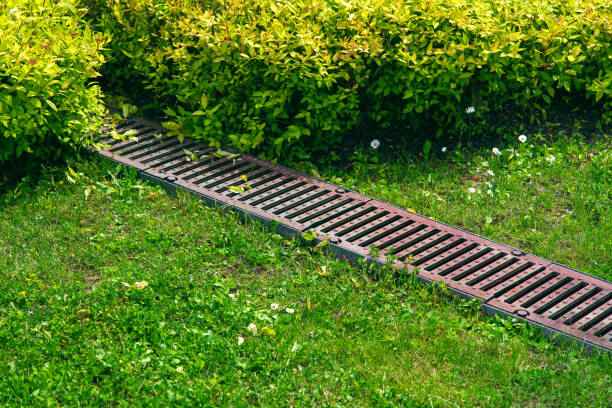
Surface drains may also be installed in areas where runoff frequently collects. These drains capture water at ground level and redirect it through underground piping.
In some cases, homeowners may benefit from a professionally designed drainage plan that evaluates how water moves across the property and redirects it safely away from the home.
FAQs
How long should water sit in my yard after rain?
Water should normally drain away within a few hours after rainfall stops. Temporary puddles may appear during heavy storms, but standing water that remains for more than a day often indicates a drainage issue. Slow drainage may occur when soil is compacted, grading directs runoff toward the house, or underground drains are blocked. If water repeatedly pools after storms, the yard may need grading adjustments or drainage improvements.
Can standing water damage my foundation?
Yes. When water collects near the foundation, it can change the moisture conditions of the surrounding soil. Over time, saturated soil may expand, compress, or erode, affecting how the structure is supported. Repeated exposure to moisture may also increase hydrostatic pressure around the foundation. These conditions can eventually contribute to cracks, settlement, or other structural movement.
Is regrading expensive?
Regrading costs vary depending on the yard’s size and the amount of soil that must be moved. Minor grading adjustments can sometimes be completed at relatively low cost, while larger projects involving drainage systems or excavation may require more extensive work. Even so, correcting grading problems early is usually less expensive than repairing structural damage caused by long-term drainage issues.
Do French drains fix yard drainage permanently?
French drains are long-term drainage systems designed to redirect water away from problem areas. When properly installed, they can significantly improve drainage performance in yards that experience frequent runoff or pooling. However, periodic maintenance may still be needed. Sediment buildup or root intrusion can reduce drainage capacity over time, so periodic inspection helps ensure the system continues to work effectively.
References
U.S. Geological Survey. (n.d.). Expansive soils and foundation movement.
https://www.usgs.gov
International Code Council. (n.d.). International Residential Code drainage requirements.
https://www.iccsafe.org
Childers Brothers. (n.d.). Booker School Foundation Repair Case Study.
https://childersleveling.com/blog/booker-school-foundation-repair-case-study
Get a Free Foundation Inspection (9 value!)
No-obligation evaluation from Texas foundation specialists.
- Free inspection (no obligation)
- Transferable lifetime warranty available
- 30+ years of Texas foundation experience